Wednesday, 14 November 2012

Dissertation Kick Off!

The culmination of the university's history program is a 15,000 word dissertation on the topic of our choice. Now that we've had some classes to discuss what such a paper entails, I feel much better about it than when I accepted my placement.
Having picked my topic, title and supervisor, I am even more confident of future success.
Time for the big reveal!

Topic:
It's Tudor based. Well duh. I'm sure you will be surprised to hear that there is no Anne Boleyn...anywhere. I admit that my original intention was to write about her in some capacity, but I quickly realized that a) there's too much information out there to process in a short time, b) she's been written on extensively (Who will top Ives? Seriously) and c) everyone and their mother is an arm-chair historian on her life.
I wanted something different, something that lacks extensive secondary sources which leaves the path open for a potential book should I so choose. As I toured the city of Sheffield and became familiar with its history, I came across an important character. Unlike Anne, there is little mystery about his personal life. Unlike Anne, he lived to be 70 (In early Tudor times nonetheless). And unlike Anne, he managed to survive many challenges where his allegiance would be tested...

Primary research tactic: plaster the walls in sticky notes. Just getting started.
 
His name is George Talbot and he is the 4th Earl of Shrewsbury. Born into a Lancastrian family who suffered loss during the Wars of the Roses, he married a lady with family ties to prominent Yorkist figureheads. He fought for Henry VII at Stoke and proceeded to quickly rise through the ranks at court, becoming a privy councillor in 1512 and Lord Steward of Henry VIII's household. All the while, he had to tend to his own estates in the north and consolidate his growing power. He survived the Wars of the Roses, the treason of Buckingham, the fall of Wolsey, Henry's "Great Matter" and the Pilgrimage of Grace.
The memorial of the 4th Earl and his two wives. He built the family chapel starting in 1520. Now known as the Shrewsbury Chapel at Sheffield Cathedral, the vault below holds the remains of several earls and family members.
 
Title:
Cunning Loyalty: The success of George Talbot in an era of Tudor faction

Supervisor:
Each student must have a professor supervising their dissertation. Obviously they need to be an expert in their field in order to provide assistance and advice. With my luck, I managed to find Dr. Catherine Fletcher. She is an early 16th century expert particularly on diplomacy in Italy. Her book "The Divorce of Henry VIII" looks at the king's matter from the eyes of his papal ambassador. I actually have two copies because they changed the title and I got confused!
In another sign that it really is a small world afterall, my friend Natalie actually interviewed Dr. Fletcher for her wonderful website Onthetudortrail.com. You can see it HERE!

The ruins of Manor Lodge. This was the home built by the 4th Early about 2 miles up hill from Sheffield Castle. A magnificent site to visit if you love ruins.

Saturday, 10 November 2012

We Remember

Today, the 11th of November, marks the day of armistice. At the eleventh hour, the guns of World War One finally fell silent leaving nothing but scarred countryside and the quiet fallen. Starting in 1919, all Commonwealth nations observe Remembrance Day to honor the fallen of the Great War. Other names include Armistice Day and Veterans Day.

Here in England, it seems there is a memorial in every town. I've lost track of the number I've seen in Sheffield alone. We must keep in mind that regiments were raised locally. When they went to war, entire battalions consisted of friends and neighbors. Similarly, when these forces were annihilated on single charges "over the top", their hometowns lost everyone.

To commemorate the day, the public adorn their coats with the "Remembrance Poppy". The flower is attributed to a heralded poem written by Canadian field surgeon Lt.Col. John McCrae:

In Flanders Fields
In Flanders fields the poppies blow
Between the crosses row on row,
That mark our place; and in the sky
The larks, still bravely singing, fly
Scarce heard amid the guns below
We are the dead. Short days ago
We lived, felt dawn, saw sunset glow,
Loved, and were loved, and now we lie
In Flanders fields.
Take up our quarrel with the foe:
To you from failing hands, we throw
The torch; be yours to hold it high.
If ye break faith with us who die
We shall not sleep, though poppies grow
In Flanders fields.
The poppies grew quickly over the graves of the fallen and their red color mirrored the blood that was shed on all sides. It has since become the unmistakeable symbol of the war.

I am humbled in wearing the poppy for its weight is not lost to me. My respect for all those who fought and died is infinite. Glory and honor to you all.

Sabaton- The Price Of A Mile

Wednesday, 7 November 2012

Dr. Starkey Has Left The Building!

Courtesy of the Historical Association- Sheffield Branch, I was able to attend a free lecture by Dr. David Starkey. He is, of course, a renowned Tudor historian both in the UK and US. For the latter, the Showtime series "The Tudors" has revived interest in the period and most fans/ historians turn to him first. In the UK, his personal commentary on current events tend to land him in hot water. Given what I heard tonight, he does like to include witty humor in his lectures. If one is easily offended, then I can see why his reputation has taken a hit.

Anyways, Dr. Starkey is known first and foremost for his studies of Henry VIII. Here is a selection of his work and I recommend them all:
"Virtuous Prince" - The story of how Henry was shaped by his childhood
"The Six Wives of Henry VIII" - A detailed analysis of the queens under Henry. There are many authors who have published under this title. I would recommend in order: Starkey, Fraiser, Weir.
"The Inventory of Henry VIII" - Edited by Dr. Starkey, this massive tome recounts every item in the King's household when he died.
"Henry VIII: Mind of a Tyrant" - A multipart TV series that ties in with his "Virtuous Prince" book.
"Monarchy" - Another TV series recalling England's monarchy in chronological order.

Firth Hall within Firth Court (1905) University of Sheffield
 
The lecture tonight was entitled: "Henry VIII: The Great Divide". Usually Dr. Starkey tends to recycle some of his work, but I was surprised to hear a fresh take on Henry's turn from Rome. Starkey argues that we, as historians, try to look for big events to justify the great impacts that follow. In this case, Starkey points out the little minutia in Henry's life which caused the split from Rome.


Firstly, he submits a view of how fanatically religious Henry was. He recalls a prayer scroll that Henry read from as a child and how graphic the depicitions of the crucifiction are. The pictures and text were meant to put the reader into a fanatical fervor/ passion of similar self sacrifice. Continuing to maturity, Henry warred with France in 1513 for two reasons: first, to continue the Hundred Years War anew and second, to act as the Pope's holy defender against Louis XII of France who broke from Rome! Henry saw himself as a righteous crusader. Even his ship, the Mary Rose, is thought to be named after the Virgin Mary. When Martin Luther first posted his "Ninety-Five Theses", Henry was the only European monarch to defend the Pope. In writing his "Defense of the Seven Sacraments", Henry was encouraged, by all people Sir Thomas More, to tone down the rhetoric pertaining to the Pope's all encompassing power on earth. Quite ironic given the events of 1535/36.)

Second, as Starkey points out, was love. Henry and Anne Boleyn's romance is well documented (including a lecture by yours truly), but he goes a step further and picks a specific turning point. In the Love Letters of Henry VIII, the king receives a gift from Anne. This jewel, a ship with a maiden and diamond represented her submission to him and their agreement to marry. Starkey dates this to new years day, 1527 because of the way the french word for "gift" is interpreted. While I'm not fully onboard with his chronological placement, the notion behind it is universal: Henry was now fully devoted to Anne and would see his marriage through. This saw his split from Rome and the creation of the new church.

Henry's conscience ruled above all and in creating his new church, Henry was adamant in seeing his will be done per God's law. By the end of his reign, the Church of England was not yet fully developed but held many similarities with the catholic church with the all important exception of Henry being the supreme head rather than the Pope.

This all being said, I saw many comparisons pulled from his TV series "Mind of a Tyrant". If you would like to know more, Youtube is your best friend.

Afterwards, Dr. Starkey opened the floor for questions. With 400 people in the room, I managed to get picked! I asked him about Window #4 at King's College Chapel in Cambridge. It is quite obvious that Henry is depicted as Solomon but historians differ as to who the Queen of Sheba is (Anne Boleyn or Katherine Howard). He responded that he doesn't know who it could be but offered an additional interpretation: that it is not of the queen, but rather of the Virgin Mary and Henry's responsibilities to the new church of England (See Carola Hicks "The King's Glass" pg 160-161). I haven't been able to track down an installation date for window #4. Given that Holbein first presented Henry as Solomon in 1534, the turn around would need to be quick for the glass to represent Anne.
My photograph of Window #4. More info about Cambridge in my UK Tour section!

Someone else asked him if he liked historical fiction. He, like me, is not a big fan but said Hillary Mantell knows what she's doing unlike Phillipa Gregory. Haha glad I'm not alone.

Dr. Starkey even stayed afterwards to sign books and talk with people who couldn't get their questions answered. I managed to poke him about Part 2 of Henry's Inventory. Turns out, the first part was just released! He also showed sincere interest in my own pursuits. I must say he is a different person when he is not lecturing or in front of the camera. Hats off to him!
I'm not usually one to complain about my looks in pictures, but I'm not in top form at all. 
 
Ah, that's better. Carry on!

Monday, 5 November 2012

Remember, Remember the 5th of November...

...the gunpowder treason and plot!

On this day in 1605, the gunpowder plot was foiled when authorities found Guy Fawkes guarding 36 barrels of gunpowder under parliament. The catholic conspirators planned to assassinate the protestant King James I as he gave a speech by blowing up the palace.
To celebrate the safe deliverance of the king, crowds in London started bonfires, a tradition which continues to this day as "Bonfire Night"/ "Guy Fawkes Day". Ironically, the celebrations usually involve fireworks which...blow up.

Sunday, 4 November 2012

More Glass Than Wall

Well it looks like it, no?

My tour of Hardwick Hall is now up. This house is the crowning achievement by Elizabeth, Countess of Shrewsbury. Judging by her initials at the top of the towers, she won't make you forget! Considered one of the finest Elizabethan houses in England, it is a must-see if you are a fan of the period. While I'm happy to have seen it, I don't feel the need to go again. I really need to find some earlier structures. I need crenellation! I need red brick! I need timber!

The link to view Hardwick is on the right under UK Tours: Hardwick Hall. Enjoy!

Friday, 2 November 2012

History In Sheffield Pt 6

 I found myself at the train station this morning and decided to make a small detour up the nearby hill. Just beyond South Street Park is another smaller park which recalls a sad period of Sheffield's history. During a recession in the early 1800s, the living conditions within the industrial city became lax and unsanitary. The result was a massive cholera outbreak which killed 402 citizens.
The dead were hastily buried in a communal grave. In 1834/5, two years after the epidemic, a monument was erected in their memory. This is now known as the Cholera Monument which sits within the grounds of Clay Woods and near the burial site of the victims.

The monument was started Dec 11, 1834 and completed April 11, 1835.


View of the monument from the only citizen who received a marked grave.
 
John Blake, aged 49, was elected Master Cutler of the city in 1831. He succumbed to the disease after a few hours and was quickly buried with the rest of the victims on the site of the present day park. His position of office accorded him this marker.


A close up of Blake's marker.
 
While the other 401 casualties did not receive immediate markers, some were placed later by surviving family members. I only managed to find two still visible above the grass surface:

 
The Cholera Monument is to the left, Blake's marker is on the right (in the patch of light) and the remaining two markers are in the open area of the park in the middle of the picture.

The monument just visible above Clay Woods. The train station is in the foreground.


Thursday, 1 November 2012

Nature Photographer?

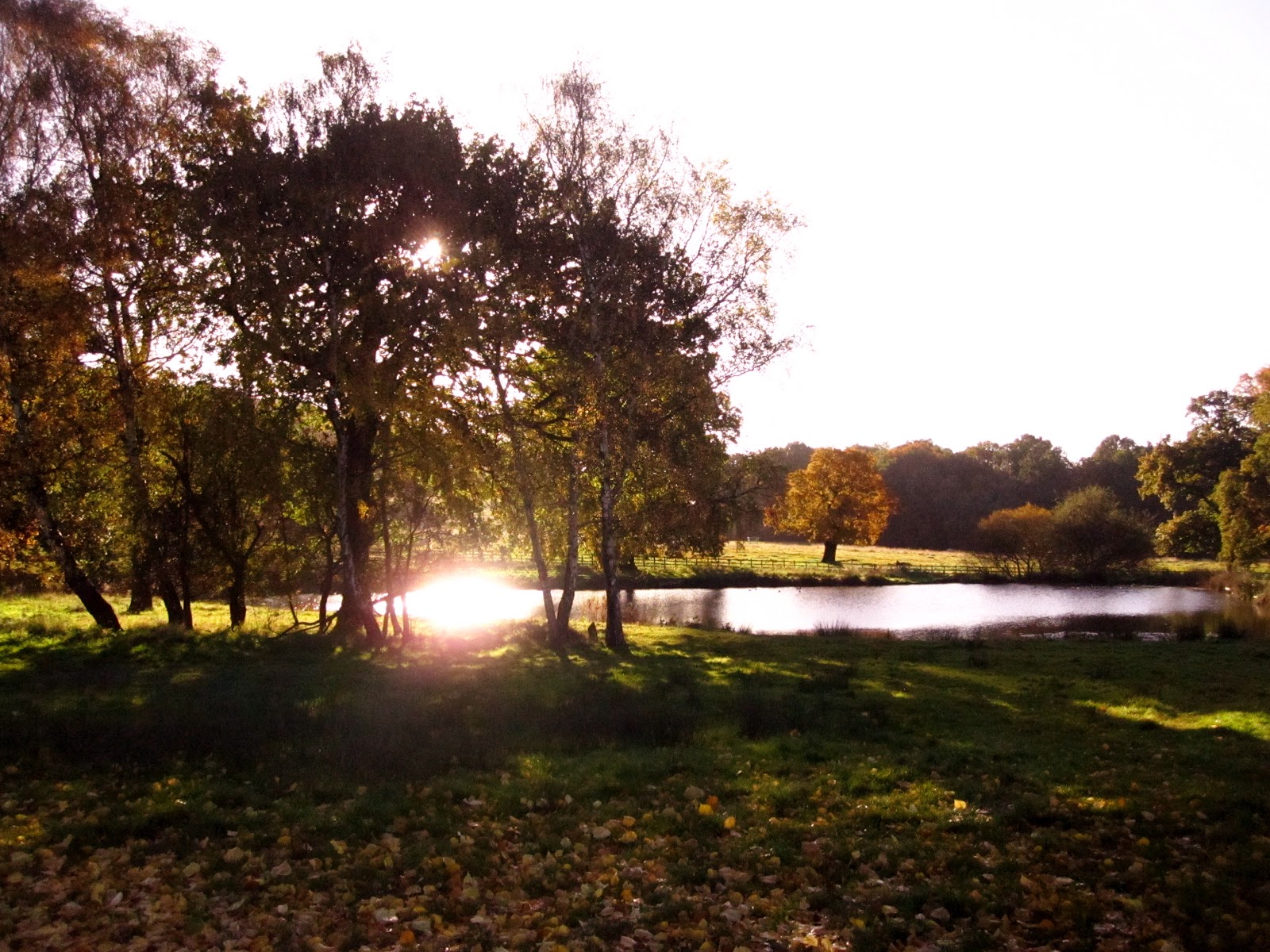
Last Saturday, I was dropped off at the bottom of Hardwick Park and had to make the trek up the hillside to both Halls. Judging by the landscape, I decided to head off in the direction that seemed the most likely way to the top. After about two miles trudging through narrow lanes and farmland, I realized that I may have guessed incorrectly! The good news is that I eventually made it to the buildings. Even better, I have some really good photographs to show for it. Note to self: make the investment and get a DSLR. Seriously.
Enjoy!


I don't think she found it a-moo-zing (ugh)